Introduction to Cloud Accounting in Healthcare Finance
The healthcare industry has undergone significant transformation over the last decade, especially in the way financial operations are managed. Traditional accounting systems that once relied heavily on spreadsheets, paper invoices, manual bookkeeping, and offline software are rapidly becoming outdated. Today, healthcare providers are embracing digital financial technologies to improve efficiency, reduce costs, and gain better control over their financial activities. One of the most impactful innovations driving this change is cloud accounting. Healthcare organizations ranging from private clinics and dental practices to hospitals and allied health centers are increasingly recognizing the benefits of cloud-based financial management systems. Businesses seeking reliable Healthcare Accounting Services in Brisbane are now prioritizing cloud accounting solutions to improve operational efficiency and maintain financial accuracy in an increasingly competitive market.
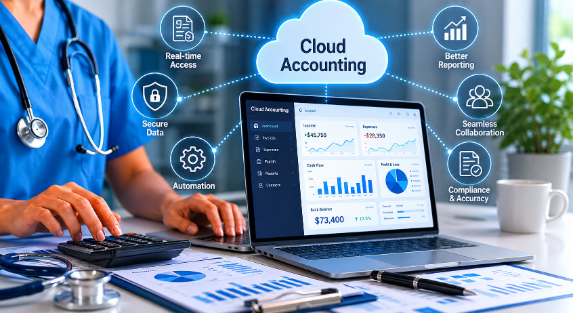
Cloud accounting refers to internet-based accounting software that allows businesses to access financial data securely from any location and at any time. Unlike traditional systems that store data on local computers or physical servers, cloud accounting stores information online using secure cloud technology. This enables healthcare providers to monitor cash flow, manage payroll, track expenses, process invoices, and generate financial reports in real time. Modern healthcare businesses require speed, flexibility, and transparency, and cloud accounting delivers all three effectively. Companies like Milan Accountants are helping healthcare providers transition toward smarter financial systems that improve productivity and long-term business performance.
Healthcare finance involves highly sensitive and complex operations, including insurance claims, patient billing, payroll management, tax compliance, and operational budgeting. Managing these activities manually often leads to inefficiencies, delays, and financial errors. Cloud accounting simplifies these processes through automation and integration, allowing healthcare organizations to focus more on patient care and less on administrative tasks. As healthcare businesses continue to grow and adapt to technological advancements, cloud accounting is becoming an essential tool for achieving financial stability and sustainable business growth in the healthcare sector.
Real-Time Financial Visibility and Smarter Decision-Making
One of the most powerful advantages of cloud accounting in healthcare finance is real-time financial visibility. In traditional accounting environments, healthcare providers often had to wait days or even weeks to access updated financial reports. This delay made it difficult to monitor business performance accurately or respond quickly to financial issues. With cloud accounting systems, healthcare organizations can access live financial data instantly from any device connected to the internet. This real-time access enables clinic owners, healthcare administrators, and financial managers to make faster and more informed decisions that directly impact operational efficiency and profitability.
Healthcare providers deal with multiple financial responsibilities daily, including patient billing, supplier payments, insurance reimbursements, staff salaries, and tax obligations. Delayed financial reporting can create confusion and reduce the ability to identify problems before they escalate. Cloud accounting platforms eliminate this issue by continuously updating financial records as transactions occur. Businesses using Healthcare Accounting Services in Brisbane can instantly monitor revenue performance, outstanding invoices, cash flow trends, operational expenses, and overall profitability through user-friendly dashboards and automated reports.
Real-time financial visibility is especially valuable for healthcare organizations managing multiple departments or clinic locations. Managers can compare financial performance across different branches, track spending patterns, and identify areas requiring improvement without waiting for monthly summaries. This helps healthcare businesses improve budgeting, optimize operational costs, and increase overall financial control. Advanced reporting features also allow providers to forecast future financial performance based on current trends, helping businesses prepare for expansion, staffing requirements, or unexpected economic challenges.
Companies such as Milan Accountants assist healthcare providers in implementing cloud-based accounting systems that support accurate financial tracking and strategic planning. By having access to real-time data, healthcare businesses can make smarter decisions regarding investments, staffing, and service expansion. This level of financial clarity ultimately improves operational efficiency, enhances patient service quality, and strengthens long-term business sustainability in an increasingly competitive healthcare environment.
Automation and Improved Accuracy in Healthcare Accounting
Healthcare finance involves managing thousands of financial transactions every month, making accuracy extremely important. Traditional bookkeeping methods often rely heavily on manual data entry, which increases the likelihood of human errors. Even small accounting mistakes can create serious consequences for healthcare businesses, including inaccurate financial reports, payroll issues, tax penalties, and compliance risks. Cloud accounting has significantly transformed healthcare finance by automating many routine accounting tasks and improving overall financial accuracy. Businesses using medical accounting services in Brisbane are increasingly adopting automated cloud-based systems to streamline operations and reduce administrative burdens.
Cloud accounting software automates critical financial functions such as invoicing, expense tracking, payroll processing, bank reconciliation, and tax calculations. This reduces the need for repetitive manual tasks while ensuring that financial records remain accurate and up to date. Automated workflows not only save time but also minimize the risk of duplicate entries, missing transactions, and calculation errors. Healthcare providers can generate invoices instantly, schedule recurring payments, and automatically categorize expenses without spending hours managing paperwork.
Payroll management is another area where automation delivers substantial benefits for healthcare businesses. Healthcare organizations often employ large teams of doctors, nurses, administrative staff, and support personnel. Managing payroll manually can be time-consuming and prone to errors, particularly when handling overtime, leave entitlements, and superannuation contributions. Cloud accounting systems simplify payroll processing by automatically calculating salaries, taxes, and deductions while ensuring compliance with Australian payroll regulations.
Automation also improves financial reporting and auditing processes. Cloud accounting platforms generate accurate reports in real time, allowing healthcare providers to access income statements, cash flow reports, balance sheets, and tax summaries whenever needed. This improves transparency and simplifies compliance with government regulations and tax requirements. Reliable firms like Milan Accountants help healthcare providers integrate cloud accounting systems that improve financial efficiency while reducing operational risks.
As healthcare businesses continue to expand, automation becomes increasingly valuable. By reducing manual workloads and enhancing financial accuracy, cloud accounting enables healthcare organizations to focus more on patient care, business development, and long-term growth strategies rather than administrative complexities and accounting errors.
Enhanced Compliance, Security, and Data Protection
Compliance and data security are major concerns in the healthcare industry. Healthcare organizations must comply with strict financial regulations, taxation requirements, payroll laws, and privacy standards while also protecting sensitive patient and financial information. Traditional accounting systems that rely on paper records or locally stored files often create security vulnerabilities and increase compliance risks. Cloud accounting has transformed healthcare finance by offering secure, compliant, and highly reliable financial management solutions for modern healthcare businesses. Organizations seeking Healthcare Accounting Services in Brisbane are increasingly adopting cloud accounting systems to strengthen both financial compliance and data protection.
One of the key advantages of cloud accounting is automatic compliance management. Cloud-based accounting software regularly updates tax rates, payroll regulations, and reporting standards to align with current Australian laws and financial requirements. This helps healthcare providers remain compliant with GST obligations, BAS lodgements, superannuation requirements, and payroll tax regulations without manually tracking legislative changes. Automated compliance tools reduce the risk of errors, missed deadlines, and financial penalties that can negatively impact healthcare businesses.
Security is another major benefit of cloud accounting systems. Healthcare organizations manage highly sensitive data, including financial records, employee information, insurance details, and payment transactions. Modern cloud accounting platforms use advanced cybersecurity measures such as encrypted data transmission, multi-factor authentication, secure cloud storage, and automatic backups to protect information from unauthorized access or cyber threats. Compared to traditional systems, cloud accounting offers stronger protection against data loss caused by hardware failures, theft, or natural disasters.
Cloud accounting also provides secure access controls that allow healthcare businesses to manage who can view or edit financial information. Administrators can assign different permission levels to accountants, managers, payroll officers, and other staff members, ensuring that sensitive data remains protected. Companies like Milan Accountants support healthcare providers by implementing secure cloud accounting solutions tailored to industry-specific compliance and security requirements.
As digital transformation continues across the healthcare sector, strong financial compliance and data protection have become essential for business sustainability. Cloud accounting helps healthcare organizations maintain secure financial operations, reduce compliance risks, and build greater trust with patients, employees, and stakeholders while supporting long-term business growth and operational stability.
The Future of Healthcare Finance With Cloud Accounting
The future of healthcare finance is becoming increasingly digital, data-driven, and technology-focused. Healthcare businesses today face growing pressure to improve operational efficiency, reduce costs, maintain compliance, and deliver better patient experiences. Traditional accounting methods are no longer capable of meeting the demands of modern healthcare organizations that require real-time insights, automated processes, and scalable financial systems. Cloud accounting is playing a central role in transforming healthcare finance and shaping the future of financial management within the healthcare industry. Businesses seeking healthcare bookkeeping services in Brisbane are rapidly adopting cloud-based technologies to remain competitive and financially resilient.
As healthcare organizations continue to expand, financial operations become more complex. Multi-location clinics, specialist practices, telehealth services, and growing patient volumes require flexible accounting systems capable of handling large amounts of financial data efficiently. Cloud accounting platforms offer scalability that allows healthcare businesses to adapt quickly as operations grow. Providers can add new users, integrate additional locations, and customize financial reporting without investing heavily in physical infrastructure or software upgrades.
The integration of cloud accounting with other healthcare technologies is also creating major advantages for healthcare providers. Modern accounting systems can connect seamlessly with practice management software, appointment scheduling systems, payroll platforms, and patient billing applications. This integration improves workflow efficiency, reduces duplicate data entry, and provides a more unified approach to financial management. Healthcare providers can monitor all financial activities from a centralized platform, saving time and improving operational coordination.
Artificial intelligence and predictive analytics are also becoming increasingly important in healthcare finance. Advanced cloud accounting systems now offer forecasting tools that help healthcare businesses predict cash flow trends, identify financial risks, and make strategic business decisions based on real-time data. Companies like Milan Accountants are helping healthcare organizations adopt modern accounting technologies that improve long-term financial planning and operational performance.
Cloud accounting is no longer simply a convenience; it is becoming a necessity for healthcare businesses aiming to achieve sustainable growth. As digital transformation continues across the healthcare industry, cloud accounting will remain essential for improving efficiency, enhancing financial visibility, strengthening compliance, and supporting smarter business decision-making for healthcare providers throughout Brisbane and beyond.