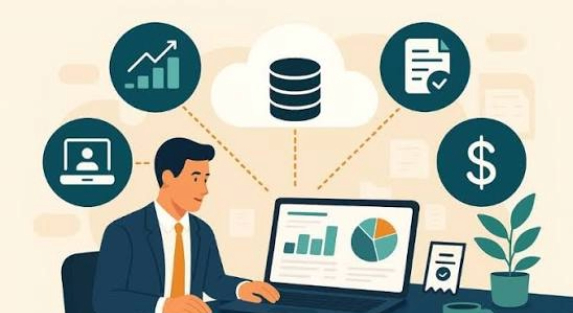
Running a business involves more than finding customers and delivering quality products or services. Business owners must also manage bookkeeping, invoices, payroll, tax obligations, cash flow, and financial reporting. Handling these responsibilities alongside daily operations can quickly become overwhelming, particularly for small businesses and growing companies.
This is where Cloud Accountants can make a real difference. By combining cloud-based accounting software with professional financial expertise, businesses can simplify accounting processes, reduce administrative workloads, and gain better control over their finances.
Instead of spending hours updating spreadsheets and organizing financial records, business owners can access up-to-date financial information and focus on growing their businesses.
In this article, we explore how cloud accountants help businesses save time, reduce accounting costs, improve financial management, and make more informed decisions.
What Are Cloud Accountants?
Cloud accountants are accounting professionals who use cloud-based accounting software to manage financial records, monitor transactions, prepare reports, and support business accounting activities online.
Unlike traditional accounting processes that may rely heavily on paperwork, physical documents, or locally stored files, cloud accounting allows authorized users to access financial information securely over the internet.
Depending on the services offered, cloud accountants can assist with:
- Bookkeeping and transaction management.
- Bank reconciliation and expense tracking.
- Payroll processing and reporting.
- Accounts payable and receivable management.
- Financial reporting and cash flow monitoring.
- Tax preparation and compliance support.
- Budgeting and financial forecasting.
Popular cloud accounting platforms, such as Xero, QuickBooks Online, and MYOB, provide tools that help businesses organize financial information and automate selected accounting tasks.
By combining these technologies with professional accounting support, businesses can establish more efficient financial management processes without maintaining every accounting function in-house.
1. Save Time Through Automated Accounting Processes
Manual accounting tasks can consume a significant amount of time. Recording transactions, matching bank statements, preparing invoices, and updating financial spreadsheets often require repetitive work.
Cloud accounting software can automate parts of these processes, allowing accountants to spend less time on routine data entry and more time reviewing financial information.
For example, bank feeds can import transactions directly into accounting software. Rules can categorize recurring transactions, while automated reminders can help businesses follow up on overdue invoices.
Cloud accountants can configure and monitor these processes to improve efficiency and maintain accurate records.
How this saves time:
- Reduces repetitive data entry.
- Simplifies bank reconciliation.
- Speeds up invoice processing.
- Makes financial documents easier to organize.
- Reduces the time required to prepare routine reports.
Consider a small business owner who spends several hours each week organizing receipts and reconciling transactions. With suitable cloud accounting tools and professional support, many of these tasks can become faster and more systematic.
The time saved can then be redirected toward customer service, business development, and other activities that contribute directly to growth.
2. Reduce Accounting and Administrative Costs
Hiring a full-time accountant may not be practical for every small business. Salaries, employee benefits, software subscriptions, training, and other employment-related expenses can place pressure on operating budgets.
Cloud accounting services provide an alternative for businesses that need professional accounting support without necessarily employing a full-time accountant.
Depending on the arrangement, businesses can outsource selected tasks or obtain ongoing support for bookkeeping, reporting, payroll, and financial management.
This flexible approach can help businesses match their accounting expenditure to their actual needs.
Cloud accounting may also reduce certain administrative costs by limiting paperwork, streamlining document sharing, and reducing duplicated work.
However, the total savings depend on the service provider’s fees, software costs, transaction volumes, and the complexity of the business.
For small businesses, the key advantage is flexibility. Rather than building an extensive internal accounting department, owners can access the level of support appropriate for their operations and budget.
3. Access Financial Information in Real Time
Making business decisions without current financial information can lead to unnecessary risks. If bookkeeping is updated only once a month or financial reports are prepared long after transactions occur, business owners may overlook emerging cash flow problems or rising expenses.
Cloud accounting platforms help address this issue by making updated financial information available online as transactions are recorded and reconciled.
Business owners and authorized accountants can review financial information from different locations without exchanging multiple versions of spreadsheets.
Depending on the software and the quality of the underlying data, this can provide a clearer picture of:
- Current cash balances.
- Outstanding customer invoices.
- Upcoming supplier payments.
- Revenue and operating expenses.
- Business performance against budgets.
For example, a business owner considering purchasing new equipment can review available cash, outstanding liabilities, and recent financial performance before committing to the expense.
Cloud accountants help turn financial data into useful business insights, allowing owners to make decisions based on better information rather than assumptions.
4. Improve Cash Flow Management
Cash flow is one of the most important factors affecting business stability. Even profitable businesses can experience financial difficulties when customers pay late or expenses become due before sufficient cash is available.
Cloud accountants can help businesses monitor incoming and outgoing payments, identify overdue invoices, and prepare cash flow forecasts.
These processes make it easier to anticipate financial pressure and take action before a problem becomes serious.
Practical cash flow management strategies include:
- Monitoring accounts receivable regularly.
- Following up on overdue customer payments.
- Scheduling supplier payments carefully.
- Forecasting upcoming operating expenses.
- Reviewing cash flow trends and expected revenue.
- Maintaining appropriate working capital reserves.
For example, a service-based business may have several outstanding invoices while rent, employee wages, and software subscriptions remain due. A cash flow report can help the owner identify the potential shortfall and prioritize collection activities.
With support from professional cloud accounting services, businesses can develop a clearer understanding of their cash position and plan their financial commitments more effectively.
5. Reduce Errors and Improve Financial Accuracy
Manual bookkeeping and disconnected spreadsheets can increase the risk of duplicate entries, incorrect calculations, missing transactions, and inconsistent financial records.
Cloud accounting software can help reduce certain errors through automated calculations, bank feeds, transaction matching, and standardized workflows.
However, automation does not eliminate every accounting risk. Incorrect transaction categorization, incomplete records, and poorly configured systems can still produce inaccurate reports.
This is why professional oversight remains important.
Cloud accountants can review reconciliations, investigate discrepancies, maintain consistent accounting procedures, and identify unusual transactions that require further attention.
Accurate records help businesses prepare reliable financial statements, understand their financial position, and meet relevant reporting obligations.
They also reduce the likelihood of spending unnecessary time correcting avoidable bookkeeping mistakes.
6. Simplify Invoicing and Payment Tracking
Creating invoices, sending payment reminders, and tracking outstanding balances can become difficult when a business manages numerous customers.
Cloud accounting platforms can streamline these activities through digital invoicing, automated reminders, payment tracking, and centralized customer records.
Cloud accountants can help establish an invoicing process that makes it easier to issue invoices promptly and monitor outstanding payments.
For instance, a consulting business that regularly invoices clients for completed projects can use automated reminders to follow up on overdue balances without manually contacting every customer.
An effective invoicing process can help businesses:
- Reduce administrative work.
- Identify overdue invoices more quickly.
- Maintain organized customer payment records.
- Improve visibility into accounts receivable.
- Support more consistent cash flow management.
Although automated reminders cannot guarantee that customers will pay on time, they can help ensure that outstanding invoices receive appropriate attention.
7. Make Tax Preparation and Compliance More Efficient
Tax preparation can become stressful when financial records are incomplete, receipts are scattered across different systems, or transactions have not been categorized correctly.
Cloud accounting helps centralize financial information, making it easier to organize records and prepare the information required for tax reporting.
Depending on the jurisdiction and services provided, cloud accountants may assist with tax calculations, financial reconciliations, reporting deadlines, and the preparation of relevant tax documents.
Maintaining organized records throughout the year can also reduce the workload associated with year-end accounting.
Businesses should remember that tax requirements vary according to their location, legal structure, industry, and activities. Professional advice is important when determining which obligations apply.
By maintaining accurate records and preparing financial information consistently, cloud accountants can help business owners manage compliance responsibilities more efficiently and reduce the risk of avoidable errors.
8. Improve Collaboration Between Business Owners and Accountants
Traditional accounting processes may involve exchanging emails, sending documents back and forth, and waiting for updated financial reports.
Cloud accounting makes collaboration easier by allowing authorized users to access the same accounting system remotely.
Business owners can upload documents, review reports, and communicate with their accountants without needing to exchange multiple versions of financial files.
This can be particularly useful for businesses with remote employees, multiple locations, or owners who travel frequently.
Cloud accountants can also use shared financial information to discuss business performance and identify areas requiring attention.
For example, if expenses increase significantly during a particular month, the accountant and business owner can review the relevant transactions together and investigate the reasons.
Better collaboration can reduce delays, improve communication, and help businesses resolve financial questions more quickly.
9. Support Business Growth Without Increasing Administrative Complexity
As businesses grow, their accounting requirements often become more complicated. Transaction volumes increase, additional employees may need to be paid, and financial reporting becomes more important.
A manual accounting system that worked for a small operation may no longer be sufficient.
Cloud accounting platforms can support growth by centralizing financial information and automating selected tasks. Many systems also offer integrations with invoicing tools, payment platforms, payroll software, and other business applications.
Cloud accountants can help businesses select appropriate systems, establish reporting procedures, and adjust workflows as operational needs change.
This can help reduce the need to rebuild accounting processes every time the business expands.
For example, an online retailer experiencing an increase in orders may need better expense tracking, sales reconciliation, inventory-related reporting, and cash flow forecasting. Suitable cloud accounting tools and professional guidance can help the business manage these requirements more efficiently.
The objective is to build an accounting system that supports sustainable growth without creating unnecessary administrative burdens.
10. Gain Better Financial Insights for Smarter Decisions
Saving time and money is important, but effective accounting should also help business owners understand how their companies are performing.
Cloud accounting software can generate reports that highlight revenue, expenses, profitability, outstanding liabilities, and cash flow trends.
Cloud accountants can help interpret these reports and explain what the figures mean for business operations.
For example, financial analysis may reveal that a particular service generates strong revenue but has unusually high delivery costs. The business owner can investigate pricing, supplier expenses, or operational efficiency to determine whether improvements are needed.
Other useful insights may include:
- Identifying unnecessary recurring expenses.
- Comparing actual spending against budgets.
- Understanding changes in profit margins.
- Evaluating the affordability of new investments.
- Forecasting future financial requirements.
- Identifying potential cash flow risks.
These insights allow business owners to move beyond recording transactions and use financial information to guide strategic decisions.
11. Protect Financial Information Through Appropriate Security Measures
Financial records contain sensitive information about a business, its employees, and its customers. Protecting this information is an important part of managing cloud accounting systems.
Reputable cloud accounting platforms generally offer security features such as encryption, access controls, and multifactor authentication, although specific protections vary by provider and configuration.
Cloud accountants and business owners should follow appropriate security practices, including:
- Enabling multifactor authentication.
- Assigning access permissions according to job responsibilities.
- Using strong, unique passwords.
- Reviewing authorized users regularly.
- Maintaining appropriate data backup and recovery arrangements.
- Keeping software and connected systems updated.
Businesses should also evaluate the provider’s security practices, data handling policies, and contractual responsibilities before selecting a service.
Cloud accounting can make financial information easier to access, but convenience should always be balanced with appropriate security and privacy controls.
How to Choose the Right Cloud Accountants for Your Business
Choosing the right accounting partner is an important decision. Not every provider offers the same services, technology, or level of support.
Before hiring a cloud accountant, consider the following factors.
1. Relevant experience: Look for an accountant who understands your industry, business structure, and financial management requirements.
2. Software expertise: Confirm that the accountant works with suitable cloud accounting platforms and can help configure the system according to your needs.
3. Service coverage: Determine whether you need bookkeeping, payroll, tax preparation, financial reporting, cash flow forecasting, or a combination of services.
4. Communication: Choose a provider who explains financial information clearly and responds to questions within an agreed timeframe.
5. Transparent pricing: Understand the fees, service inclusions, software costs, and any additional charges before committing.
6. Data security: Ask how financial information is protected and how access to accounting records is managed.
7. Scalability: Ensure the service can accommodate your business as transaction volumes, staffing requirements, and reporting needs increase.
The right provider should help you maintain accurate records while making financial management simpler and more useful.
Conclusion
Managing business finances does not have to consume hours of your working week or require unnecessary administrative spending. With suitable technology and professional support, businesses can simplify bookkeeping, improve financial accuracy, strengthen cash flow management, and gain better visibility into their financial performance.
Cloud Accountants combine cloud-based technology with accounting expertise to help business owners manage their finances more efficiently. From automating routine tasks and organizing invoices to preparing financial reports and supporting tax compliance, they can help businesses reduce administrative burdens and make more informed decisions.
The real value lies in having reliable financial information when you need it, without making accounting more complicated than necessary.
Whether you run a startup, a small business, or an established company, cloud accounting may offer a practical way to improve financial management while freeing up time for activities that support growth.
Ready to Save Time and Money with Cloud Accountants?
Managing bookkeeping, invoices, cash flow, and financial reporting can take valuable time away from running your business. The right cloud accounting support can help simplify these responsibilities and give you a clearer understanding of your financial position.
Contact our team today to explore cloud accounting services tailored to your business needs.
Whether you need help with bookkeeping, financial reporting, cash flow management, or accounting software setup, we can help you identify practical ways to streamline your processes and improve financial visibility.
Get in touch today to arrange a consultation and discover how professional cloud accountants can help your business save time, control costs, and grow with confidence.