Introduction
The hospitality industry operates in one of the most competitive and fast-moving business environments. Restaurants, cafés, bars, and hospitality venues must manage daily sales, employee wages, supplier payments, inventory purchases, tax obligations, and customer expectations simultaneously. As operational complexity continues to increase, traditional accounting methods are becoming less effective in helping hospitality businesses maintain accurate financial records and make informed decisions.
Over the past decade, technology has dramatically changed how businesses manage their finances. Among the most significant developments is cloud accounting, a modern approach that allows business owners and accountants to access financial information in real time from virtually anywhere. Unlike traditional desktop-based accounting systems, cloud accounting stores financial data securely online, making it easier to manage transactions, monitor performance, and collaborate with financial professionals.
For businesses seeking Restaurants and Cafes Accounting Services in Brisbane, cloud accounting has become an essential component of efficient financial management. Restaurant owners no longer need to wait until month-end reports are prepared to understand how their business is performing. Instead, they can view current sales, expenses, cash flow, and profitability metrics whenever they need them.
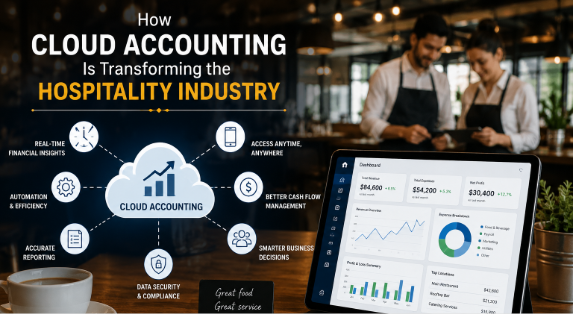
The growing adoption of cloud accounting is transforming the hospitality sector by improving financial visibility, reducing manual processes, increasing compliance accuracy, and supporting smarter business decisions. Whether operating a small independent café or managing multiple restaurant locations, hospitality businesses can gain significant advantages from implementing cloud-based accounting systems.
With professional support from Milan Accountants, restaurants and cafés can leverage modern accounting technologies to streamline financial operations and build a stronger foundation for sustainable growth in an increasingly digital business environment.
Understanding Cloud Accounting
What Is Cloud Accounting?
Cloud accounting refers to the use of internet-based accounting software that stores financial data on secure remote servers rather than on a local computer or internal company network. Users can access their financial records through a web browser or mobile application, providing greater flexibility and convenience than traditional accounting systems.
Unlike conventional accounting software, which often requires manual backups, software installations, and periodic upgrades, cloud accounting platforms automatically update and maintain financial information in real time. This ensures that business owners always have access to the latest financial data without worrying about technical maintenance.
Key Features of Cloud Accounting
Modern cloud accounting solutions offer a wide range of features specifically beneficial to hospitality businesses. These include:
- Real-time financial reporting
- Automated bank reconciliation
- Payroll processing
- GST and BAS management
- Inventory tracking
- Invoice automation
- Cash flow forecasting
- Multi-user access
For restaurants and cafés, these features simplify day-to-day financial management while reducing administrative workload.
Why It Matters for Hospitality Businesses
Hospitality businesses generate a large volume of daily transactions. Managing these transactions manually can be time-consuming and prone to errors. Cloud accounting automates many financial processes, allowing restaurant owners to focus more on customer service, operations, and business growth.
Businesses utilizing restaurant accounting services in Brisbane often find that cloud accounting improves efficiency by creating a centralized financial management system that connects sales, payroll, inventory, and reporting into one integrated platform.
As technology continues to evolve, cloud accounting is becoming a standard business tool rather than a luxury. Restaurants and cafés that adopt these systems gain better visibility into their financial performance and can make quicker, more informed decisions that contribute to long-term success.
Why the Hospitality Industry Needs Cloud Accounting
Unique Financial Challenges in Hospitality
The hospitality sector faces financial challenges that differ significantly from many other industries. Restaurants and cafés must manage fluctuating customer demand, perishable inventory, complex staffing arrangements, supplier relationships, and changing operating costs. These factors create a highly dynamic financial environment that requires constant monitoring and rapid decision-making.
Traditional accounting systems often struggle to keep pace with these demands because they rely heavily on manual data entry and delayed reporting. By the time financial reports are prepared, important opportunities or problems may have already emerged.
Managing High Transaction Volumes
Restaurants and cafés process hundreds or even thousands of transactions every week. Recording, categorizing, and reconciling these transactions manually can consume valuable time and increase the risk of errors.
Cloud accounting automatically captures and organizes financial information, allowing business owners to maintain accurate records without extensive manual effort. This automation improves efficiency and reduces the likelihood of costly accounting mistakes.
Supporting Better Business Decisions
One of the biggest advantages of cloud accounting is its ability to provide real-time insights into business performance. Hospitality operators can immediately access information related to:
- Revenue trends
- Operating expenses
- Labour costs
- Food costs
- Profit margins
- Cash flow
These insights help managers identify opportunities to improve profitability and address financial concerns before they become significant issues.
Businesses seeking Restaurants and Cafes Accounting Services in Brisbane, cafe accounting services in Brisbane, and hospitality accounting services in Brisbane increasingly rely on cloud accounting solutions because they provide the visibility and control necessary to thrive in a competitive market.
As hospitality businesses continue to face rising costs and increasing customer expectations, cloud accounting offers the technology and financial intelligence needed to remain agile, compliant, and profitable.
Real-Time Financial Visibility
Accessing Financial Data Whenever You Need It
One of the most transformative benefits of cloud accounting for hospitality businesses is real-time financial visibility. In the restaurant and café industry, business conditions can change rapidly due to seasonal demand, customer preferences, staffing requirements, and fluctuating food costs. Waiting until the end of the month to review financial reports is no longer practical for businesses that need to make quick and informed decisions.
Cloud accounting platforms provide instant access to financial information through user-friendly dashboards and customized reports. Restaurant owners can monitor sales performance, review operating expenses, track payroll costs, and evaluate profitability from any location using a computer, tablet, or smartphone. This level of accessibility allows business owners to stay connected to their financial performance even when they are away from the premises.
Better Decision-Making Through Real-Time Reporting
Having immediate access to accurate financial data enables restaurant and café owners to identify trends before they become major issues. For example, if food costs increase unexpectedly or labour expenses exceed budgeted targets, managers can respond quickly and implement corrective measures.
Real-time reporting also helps hospitality businesses monitor daily and weekly performance indicators, making it easier to adjust pricing strategies, control expenses, and improve operational efficiency. Instead of relying on outdated reports, decision-makers can base their actions on current financial information.
Supporting Growth and Profitability
Businesses using Restaurants and Cafes Accounting Services in Brisbane increasingly value real-time visibility because it creates greater transparency and accountability across operations. Accountants can also access the same information simultaneously, enabling proactive financial guidance rather than reactive problem-solving.
With cloud accounting, hospitality operators gain a clearer understanding of their financial position at any moment. This enhanced visibility supports better budgeting, stronger cash flow management, and more strategic planning, ultimately contributing to long-term profitability and business growth.
Improved Cash Flow Management
Understanding the Importance of Cash Flow
Cash flow is often described as the lifeblood of a hospitality business. Even profitable restaurants can face financial challenges if they do not effectively manage the timing of incoming and outgoing cash. Rent payments, supplier invoices, utility bills, employee wages, and tax obligations all require careful planning to ensure sufficient funds are available when needed.
Many hospitality businesses struggle with cash flow because they rely on manual bookkeeping methods that provide limited visibility into future financial requirements. Cloud accounting addresses this challenge by offering real-time cash flow monitoring and forecasting tools that help business owners make informed financial decisions.
Forecasting Future Financial Needs
Cloud accounting software automatically tracks income and expenses, allowing business owners to generate cash flow forecasts based on historical data and upcoming obligations. These forecasts provide valuable insights into potential cash shortages or surpluses, enabling businesses to plan ahead and avoid financial stress.
For example, restaurant owners can anticipate seasonal fluctuations in customer demand and adjust spending accordingly. They can also schedule supplier payments strategically while ensuring payroll obligations are met without disrupting daily operations.
Improving Financial Stability
By continuously monitoring cash flow, hospitality businesses can identify areas where expenses can be reduced or revenue can be increased. Automated alerts and reporting features help managers stay informed about overdue invoices, upcoming bills, and changing financial conditions.
Businesses seeking restaurant accounting services in Brisbane often benefit significantly from cloud-based cash flow management because it provides greater financial control and reduces uncertainty. With accurate forecasting and real-time insights, restaurants and cafés can make confident decisions that support both short-term stability and long-term growth.
Seamless Integration with POS Systems
Connecting Sales and Accounting Data
Point-of-sale systems play a central role in modern restaurant and café operations. Every customer transaction flows through a POS system, generating valuable financial data that must be accurately recorded and analyzed. Traditionally, transferring this information into accounting software required manual data entry, increasing administrative workload and creating opportunities for human error.
Cloud accounting eliminates this inefficiency by integrating directly with hospitality POS systems. Sales data is automatically transferred into accounting records, ensuring accuracy and reducing the time spent on bookkeeping tasks.
Enhancing Operational Efficiency
When POS systems and accounting software work together, restaurant owners gain a comprehensive view of business performance. Daily sales, payment methods, discounts, refunds, and tax information are automatically recorded and categorized. This integration streamlines financial reporting and improves reconciliation processes.
Managers can quickly compare sales figures with inventory usage, labour costs, and operating expenses to evaluate profitability and identify trends. Automated data synchronization also reduces duplication of work and minimizes discrepancies between operational and financial records.
Supporting Better Financial Analysis
Integrated systems provide valuable insights that help hospitality businesses make smarter decisions. Owners can analyze product performance, monitor peak sales periods, and evaluate customer purchasing behaviour using accurate financial information.
Businesses utilizing Restaurants and Cafes Accounting Services in Brisbane often find that POS integration significantly improves efficiency by creating a seamless flow of information across departments. This allows management teams to focus more on customer experience and business development rather than administrative tasks.
Streamlined Payroll Management
Managing Complex Hospitality Payroll Requirements
Payroll management is one of the most challenging aspects of operating a restaurant or café. Hospitality businesses frequently employ a combination of full-time, part-time, and casual staff, each with different wage rates, working hours, overtime entitlements, and superannuation obligations. Compliance with Australian employment laws requires careful attention to detail and accurate record keeping.
Manual payroll processes can be time-consuming and increase the risk of calculation errors, underpayments, or compliance breaches. Cloud accounting software helps simplify these processes through automation and integrated payroll functionality.
Automating Payroll Processes
Cloud accounting platforms automatically calculate wages, tax withholdings, superannuation contributions, penalty rates, and leave entitlements. Employee timesheets can be integrated directly into payroll systems, reducing manual data entry and ensuring greater accuracy.
Automated payroll processing also supports Single Touch Payroll reporting requirements, helping hospitality businesses remain compliant with Australian Taxation Office regulations. Reports can be generated quickly, providing transparency and simplifying year-end payroll obligations.
Improving Employee and Business Satisfaction
Accurate and timely payroll processing contributes to stronger employee relationships and improved workplace morale. Staff members receive confidence that they are being paid correctly, while business owners reduce the risk of costly disputes and penalties.
Businesses working with cafe accounting services in Brisbane often benefit from cloud-based payroll systems because they streamline administrative tasks while ensuring compliance with industry-specific employment requirements. By reducing payroll complexity, hospitality operators can devote more time to delivering exceptional customer experiences.
Enhanced Inventory Control
Managing Inventory Efficiently
Inventory represents one of the largest expenses for restaurants and cafés. Poor inventory management can lead to excessive food waste, stock shortages, overordering, and reduced profitability. Because hospitality businesses rely heavily on perishable goods, maintaining accurate inventory records is critical for financial success.
Cloud accounting systems integrated with inventory management software provide real-time visibility into stock levels and purchasing activity. This allows businesses to monitor inventory more effectively and make informed purchasing decisions.
Reducing Costs and Waste
Automated inventory tracking helps restaurant owners identify slow-moving items, monitor food usage, and detect discrepancies between recorded and actual stock levels. By understanding inventory trends, businesses can reduce waste and optimize ordering processes.
Cloud-based systems also provide detailed reports on food costs and supplier performance. These insights help managers negotiate better supplier agreements and improve overall cost control.
Supporting Profitability
Effective inventory management directly impacts profit margins. When restaurants can accurately track inventory usage and control purchasing expenses, they are better positioned to maintain healthy financial performance.
Businesses seeking hospitality accounting services in Brisbane often discover that cloud-based inventory management plays a vital role in improving operational efficiency and profitability. By integrating inventory data with accounting records, hospitality businesses gain a more complete understanding of their financial position and can make smarter business decisions.
Better Tax Compliance and Reporting
Simplifying Tax Obligations
Tax compliance is a critical responsibility for hospitality businesses. Restaurants and cafés must accurately record transactions, calculate GST, prepare BAS statements, and maintain detailed financial records to meet regulatory requirements. Manual accounting systems often increase the risk of errors, omissions, and compliance issues.
Cloud accounting simplifies tax management by automating many compliance-related processes. Transactions are categorized automatically, tax calculations are updated in real time, and reports can be generated quickly when needed.
Improving Accuracy and Record Keeping
Cloud-based systems maintain digital records of all financial activities, creating a comprehensive audit trail that supports compliance and transparency. Business owners can easily access invoices, receipts, payroll records, and tax reports whenever required.
Automated GST calculations and BAS reporting features reduce the likelihood of mistakes and help ensure accurate submissions to tax authorities. This minimizes compliance risks and saves valuable administrative time.
Reducing Stress During Tax Season
Businesses using Restaurants and Cafes Accounting Services in Brisbane benefit from having organized financial records available throughout the year. Rather than scrambling to gather documents at tax time, owners can rely on continuously updated accounting systems that maintain accurate information automatically.
This proactive approach improves financial management while helping hospitality businesses avoid penalties, audits, and unnecessary stress associated with tax compliance.
Increased Collaboration with Accountants
Real-Time Communication and Support
Cloud accounting has fundamentally changed the relationship between business owners and their accountants. Instead of exchanging spreadsheets, paper records, and email attachments, both parties can access the same financial data simultaneously through a secure online platform.
This shared access enables accountants to provide timely advice and identify potential issues before they become significant problems.
Delivering Proactive Financial Guidance
Because accountants can view real-time financial information, they can offer strategic recommendations based on current business performance. This may include cash flow planning, budgeting assistance, tax strategies, and profitability analysis.
Hospitality businesses no longer need to wait until year-end to receive financial insights. Instead, they can benefit from ongoing guidance that supports better decision-making throughout the year.
Strengthening Business Performance
Businesses utilizing restaurant accounting services in Brisbane often experience improved financial outcomes because cloud accounting promotes stronger collaboration between management and accounting professionals. The ability to work from the same data set increases accuracy, improves efficiency, and supports more effective planning.
Data Security and Business Continuity
Protecting Financial Information
Many business owners initially have concerns about storing financial data online. However, reputable cloud accounting providers invest heavily in security infrastructure designed to protect sensitive business information.
Features such as data encryption, multi-factor authentication, secure servers, and continuous monitoring help safeguard financial records from unauthorized access and cyber threats.
Automatic Backups and Disaster Recovery
Traditional accounting systems often rely on local storage, making them vulnerable to hardware failures, theft, fire, or accidental data loss. Cloud accounting platforms automatically back up data, ensuring that information remains accessible even if local devices are damaged or lost.
This level of protection enhances business continuity and reduces operational risk.
Building Long-Term Confidence
For hospitality businesses, maintaining secure and reliable financial records is essential. Cloud accounting provides peace of mind by ensuring that critical business information remains protected and available whenever needed.
Scalability for Growing Hospitality Businesses
Supporting Business Expansion
As restaurants and cafés grow, their financial management requirements become increasingly complex. Multiple locations, larger workforces, expanded inventories, and additional revenue streams require more sophisticated accounting systems.
Cloud accounting platforms are designed to scale alongside business growth without requiring significant infrastructure investments.
Managing Multi-Location Operations
Many cloud accounting solutions support consolidated reporting across multiple venues. Owners can compare performance between locations, monitor profitability, and maintain centralized financial control.
This capability is particularly valuable for hospitality groups seeking consistent financial management practices across their operations.
Preparing for Future Success
Businesses seeking Restaurants and Cafes Accounting Services in Brisbane benefit from scalable accounting systems that support long-term growth objectives. Cloud accounting provides the flexibility and functionality required to adapt to changing business needs while maintaining financial visibility and control.
How Milan Accountants Supports Hospitality Businesses
Combining Industry Expertise with Modern Technology
Milan Accountants understands the unique financial challenges faced by restaurants and cafés. By leveraging advanced cloud accounting solutions, the firm helps hospitality businesses streamline operations, improve reporting accuracy, and maintain regulatory compliance.
Delivering Tailored Financial Solutions
The firm works closely with hospitality operators to implement accounting systems that align with their specific business requirements. From bookkeeping and payroll management to tax planning and financial reporting, Milan Accountants provides comprehensive support designed to enhance business performance.
Helping Businesses Thrive
By combining professional expertise with cloud-based technology, Milan Accountants enables restaurants and cafés to gain deeper financial insights, improve efficiency, and achieve sustainable growth in an increasingly competitive hospitality market.
Conclusion
Cloud accounting is transforming the hospitality industry by delivering real-time financial visibility, streamlined payroll processing, improved inventory management, enhanced compliance, and stronger collaboration between business owners and accountants. These capabilities help restaurants and cafés operate more efficiently while making smarter financial decisions.
As technology continues to evolve, cloud accounting will remain a critical tool for hospitality businesses seeking sustainable growth and competitive advantage. For businesses looking for Restaurants and Cafes Accounting Services in Brisbane, partnering with Milan Accountants and adopting modern cloud accounting solutions can create a strong financial foundation that supports long-term success in the ever-changing hospitality landscape.