Managing business finances has become more complex than simply recording income, tracking expenses, and preparing financial statements. Businesses today need accurate financial information, faster reporting, better cash flow management, and the ability to make informed decisions without unnecessary delays.
Traditional accounting methods often involve spreadsheets, manual data entry, paperwork, and time-consuming financial processes. While these methods may work for some businesses, they can become challenging as operations expand.
This is where cloud accounting is making a significant difference.
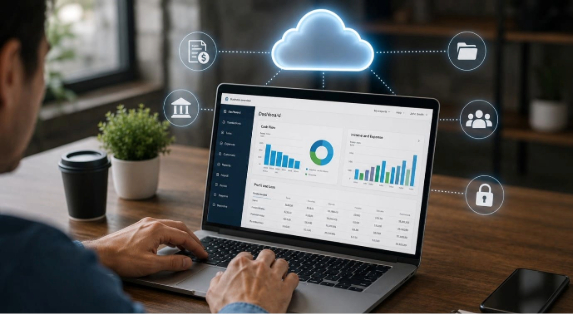
With cloud-based technology, businesses can access financial information in real time, automate routine accounting tasks, and collaborate with accounting professionals from virtually anywhere. Cloud Accountants are helping businesses embrace this transformation by combining financial expertise with modern accounting technology.
Whether you operate a small business, manage a startup, or run an established organisation, understanding how cloud accounting works can help you prepare for the future of business finance.
Let’s explore how cloud accounting is transforming financial management and why more businesses are adopting this approach.
1. Provides Real-Time Access to Financial Information
One of the biggest advantages of cloud accounting is the ability to access financial information whenever it is needed.
Traditional accounting often requires businesses to wait for updated reports or communicate with their accounting teams to understand their current financial position.
Cloud accounting changes this process.
With cloud-based accounting software, business owners can access important financial information, including:
- Income and expenditure records.
- Outstanding invoices and payments.
- Cash flow statements.
- Business expenses.
- Profit and loss reports.
- Current financial balances.
This real-time visibility helps business owners understand how their organisation is performing without waiting for month-end reports.
Professional cloud accountants can also use this information to identify financial trends, highlight potential problems, and provide timely recommendations.
As a result, businesses can make financial decisions based on current information rather than outdated records.
2. Automates Repetitive Accounting Tasks
Manual accounting activities can consume a considerable amount of time, particularly for businesses handling large numbers of transactions.
Tasks such as recording expenses, reconciling bank statements, generating invoices, and tracking payments can become repetitive and increase the possibility of human error.
Cloud accounting software helps automate many of these activities.
For example:
- Bank feeds can automatically import transaction information.
- Recurring invoices can be generated automatically.
- Payment reminders can be scheduled.
- Expense transactions can be categorised.
- Bank reconciliation can be streamlined.
- Financial reports can be generated using updated records.
This automation reduces the amount of manual work required and allows accounting professionals to focus on more valuable activities.
Instead of spending hours updating spreadsheets, cloud accountants can dedicate more time to financial analysis, budgeting, forecasting, and business advisory services.
3. Makes Financial Management More Flexible
Business operations are no longer restricted to a single office or location. Many organisations operate remotely, manage multiple branches, or work with employees and suppliers across different regions.
Cloud accounting supports this flexible working environment.
Because financial information is stored on cloud-based platforms, authorised users can access relevant records through internet-connected devices.
Business owners can review financial reports while travelling, approve invoices remotely, and communicate with their accounting teams without being physically present in the same location.
This flexibility is particularly valuable for:
- Small businesses with remote teams.
- Startups operating with limited office infrastructure.
- E-commerce businesses managing online transactions.
- Consultants and freelancers.
- Organisations with multiple business locations.
By working with virtual cloud accountants, businesses can receive accounting support without depending on traditional office-based processes.
4. Improves Cash Flow Management
Cash flow is one of the most important aspects of running a successful business.
Even profitable businesses can experience financial difficulties when customer payments are delayed, operating expenses increase, or cash reserves become insufficient.
Cloud accounting helps businesses maintain better visibility into their cash flow.
Accounting platforms can provide information about outstanding invoices, upcoming payments, operating expenses, and available balances.
This allows business owners and their accountants to identify potential cash flow issues earlier.
For example, if several customers have overdue invoices, the accounting team can identify the outstanding amounts and recommend appropriate follow-up actions.
Similarly, reviewing expense patterns can help businesses identify unnecessary spending and improve financial planning.
Professional cloud accounting services can therefore play an important role in helping businesses maintain healthier cash flow and manage their financial obligations.
5. Strengthens Collaboration Between Businesses and Accountants
Communication between business owners and accounting professionals is essential for effective financial management.
Traditional accounting often involves exchanging spreadsheets, sending documents through email, and manually updating financial records.
These processes can create confusion when different people work with different versions of the same document.
Cloud accounting makes collaboration easier by allowing authorised users to work with shared financial information.
Business owners, accountants, and finance teams can access relevant records according to their permissions.
This improves coordination and reduces unnecessary communication delays.
For example, a business owner can upload an expense receipt while their accountant reviews the transaction and updates the relevant financial records.
Both parties can work with the same information without repeatedly exchanging files.
This collaborative approach helps create a more organised and transparent accounting process.
6. Improves Financial Accuracy and Reduces Manual Errors
Accurate financial records are essential for understanding business performance, preparing tax returns, and meeting reporting obligations.
Manual data entry, inconsistent record-keeping, and outdated spreadsheets can increase the possibility of accounting errors.
Cloud accounting software helps reduce these risks through automation, transaction matching, validation features, and organised record management.
However, automation does not eliminate every accounting error. Incorrect categorisation, duplicate transactions, and missing information can still occur.
This is why professional oversight remains important.
Experienced cloud accountants review financial records, investigate discrepancies, reconcile accounts, and ensure transactions are recorded appropriately.
Combining accounting expertise with automated technology helps businesses maintain more reliable financial information.
7. Simplifies Tax Preparation and Financial Compliance
Tax preparation can become stressful when financial records are incomplete, expenses are poorly organised, or important documents are difficult to locate.
Cloud accounting helps simplify this process by keeping financial information organised throughout the year.
Businesses can maintain digital records of:
- Sales and purchase transactions.
- Business expenses.
- Invoices and receipts.
- Payroll-related information.
- Tax-related transactions.
- Bank statements and reconciliations.
Having organised records makes it easier for accountants to review financial information and prepare the necessary reports.
Cloud accountants can also help businesses monitor tax-related obligations, identify missing documentation, and prepare for upcoming filing deadlines.
The specific compliance requirements depend on the business’s location and applicable tax regulations.
Maintaining accurate records throughout the year can reduce last-minute preparation and make tax management more efficient.
8. Supports Better Budgeting and Financial Forecasting
Financial planning is not just about understanding how much a business has earned. It is also about preparing for future expenses, identifying growth opportunities, and managing financial risks.
Cloud accounting provides access to historical and current financial information that can support more informed planning.
For example, businesses can review previous spending patterns, compare revenue across different periods, and identify areas where expenses are increasing.
Accountants can use this information to help businesses:
- Prepare realistic operating budgets.
- Forecast future cash flow.
- Identify unnecessary expenses.
- Plan investments.
- Evaluate business profitability.
- Set achievable financial targets.
Professional cloud accounting services can go beyond basic bookkeeping by helping business owners understand what their financial information means and how to use it for future planning.
9. Makes Accounting More Scalable for Growing Businesses
As businesses grow, their financial management requirements also become more demanding.
A small organisation may initially handle its accounting through basic spreadsheets or simple bookkeeping software. However, increasing transaction volumes, additional employees, multiple locations, and more complex reporting requirements can make these methods difficult to manage.
Cloud accounting offers greater flexibility as business requirements evolve.
Businesses can adopt additional software features, integrate other business applications, and provide access to new team members when required.
This makes cloud-based accounting particularly useful for growing organisations.
Rather than completely changing their accounting infrastructure every time the business expands, companies can adapt their existing systems to accommodate new requirements.
Working with professional cloud accountants also helps businesses ensure that their accounting processes remain organised as operations become more complex.
10. Integrates Accounting with Other Business Applications
Modern businesses use multiple digital tools to manage their daily operations.
These may include customer relationship management systems, e-commerce platforms, payroll software, inventory management applications, and payment processing solutions.
Managing information separately across these platforms can create unnecessary administrative work.
Cloud accounting software can integrate with compatible business applications to streamline financial information.
For example:
- E-commerce integrations can help synchronise sales information.
- Payment gateways can simplify transaction recording.
- Payroll integrations can streamline salary-related accounting.
- Inventory systems can support stock-related financial records.
- CRM integrations can improve visibility into customer-related financial activity.
These integrations reduce repetitive data entry and help create a more connected business management system.
However, integration capabilities depend on the software platforms selected and the configuration of each system.
11. Enhances Financial Data Security and Backup Management
Financial information is among the most sensitive data a business manages.
Invoices, payroll records, bank information, customer details, and financial statements must be handled carefully.
Reputable cloud accounting platforms typically provide security features such as encryption, access controls, multi-factor authentication, and automated backups.
These features can help protect financial information against unauthorised access and accidental data loss.
However, cloud accounting is not automatically risk-free.
Businesses should follow good security practices, including:
- Using strong and unique passwords.
- Enabling multi-factor authentication.
- Restricting access according to job responsibilities.
- Reviewing user permissions regularly.
- Keeping devices and software updated.
- Maintaining appropriate data backup procedures.
Professional cloud accountants can also help businesses establish organised financial data management processes.
12. Artificial Intelligence Is Taking Cloud Accounting Further
Artificial intelligence is creating new opportunities in the accounting industry.
AI-powered tools can assist with transaction categorisation, document extraction, anomaly detection, invoice processing, and financial data analysis.
These technologies can help accountants process information more efficiently and identify patterns that might otherwise take considerable time to discover.
For example, AI-assisted systems may flag unusual transactions, identify recurring expense patterns, or help extract information from uploaded invoices.
However, AI should support professional accounting judgement rather than replace it.
Financial decisions, tax interpretations, compliance checks, and complex reporting still require appropriate human oversight.
The combination of cloud platforms, automation, and AI is likely to make accounting services more efficient, data-driven, and accessible.
For businesses, this means working with cloud accountants who understand both financial management and emerging accounting technologies will become increasingly valuable.
Cloud Accounting vs. Traditional Accounting: Understanding the Difference
Both traditional and cloud accounting aim to maintain accurate financial records and support business decision-making. However, their processes and capabilities can differ significantly.
| Comparison Factor | Traditional Accounting | Cloud Accounting |
|---|---|---|
| Data Access | Often dependent on office systems or shared files | Accessible online through authorised devices |
| Financial Updates | May involve periodic manual updates | Can provide frequently updated financial information |
| Data Entry | Often involves more manual processes | Supports automated transaction imports |
| Collaboration | Frequently relies on email and document sharing | Supports shared access and collaboration |
| Reporting | May require manual report preparation | Offers automated reporting features |
| Software Integration | Depends on available systems | Supports integrations with compatible applications |
| Scalability | May require additional infrastructure | Can often scale through software plans and integrations |
| Remote Working | Can be more difficult | Supports remote access and collaboration |
The right approach depends on a business’s size, financial complexity, technology requirements, and available resources. However, cloud accounting offers considerable advantages for businesses looking for greater flexibility and automation.
Why Businesses Should Consider Hiring Professional Cloud Accountants
Although accounting software provides useful automation and reporting features, having the right professional support remains essential.
Software can organise financial information, but businesses still need experienced professionals to interpret that information and ensure accounting records are accurate.
Professional cloud accountants can help with:
1. Bookkeeping and Financial Record Management: Maintain organised records of business income, expenses, and transactions.
2. Bank Reconciliation: Review financial transactions and identify discrepancies.
3. Financial Reporting: Prepare and interpret profit and loss statements, balance sheets, and cash flow reports.
4. Tax Preparation Support: Organise financial information and assist with relevant tax reporting requirements.
5. Cash Flow Management: Monitor incoming and outgoing payments to help businesses maintain financial stability.
6. Financial Planning: Use financial information to support budgeting, forecasting, and business decisions.
7. Accounting Software Management: Help businesses select, configure, and use suitable cloud accounting platforms.
Working with experienced cloud accounting professionals allows business owners to focus more on running and growing their organisations while maintaining better control over their finances.
The Future of Business Finance Is Moving to the Cloud
Cloud accounting is changing how businesses manage financial information, collaborate with accountants, and make important financial decisions.
From real-time reporting and automated bookkeeping to AI-powered analysis and integrated business applications, cloud technology is making accounting more flexible and efficient.
For small businesses, startups, and established organisations, adopting cloud accounting can help simplify financial operations and provide better visibility into business performance.
However, technology alone is not enough. The real value comes from combining the right accounting software with professional financial expertise.
As business requirements continue to evolve, cloud accountants will play an increasingly important role in helping organisations maintain accurate records, improve financial management, and plan for sustainable growth.
Ready to Make Your Business Accounting Smarter?
Managing business finances shouldn’t take all your time and attention. With the right cloud accounting solutions, you can simplify bookkeeping, access financial information more easily, and make better-informed business decisions.
Whether you are a startup, small business owner, freelancer, or growing organisation, professional cloud accounting support can help you take greater control of your finances.
Looking for reliable cloud accountants to support your business?
Get in touch with our experienced accounting team today to discuss your requirements. Let us help you streamline your financial processes, improve bookkeeping efficiency, and build a more organised approach to business finance.
Contact us today to explore our cloud accounting services and take the next step towards smarter financial management!